
In conjunction with Community Hospital of the Monterey Peninsula we are a Center of Excellence Bariatric Surgical Program offering weight loss surgery since 2001.
Our program was established by Dr. Mark Vierra, MD, FACS, who directed the obesity surgery program at Stanford for over a decade until he moved to Monterey in September of 2001.
Dr. Vierra and Dr. Lurie together perform laparoscopic gastric bypass and laparoscopic adjustable gastric banding and provide continuous coverage for these patients within our group. As of January 2010 we have performed > 1000 weight loss operations at Community Hospital and have some of the strongest safety experience anywhere.
Please see more detail about weight loss surgery.
What is a Center of Excellence?
Community Hospital was established as a Center of Excellence by the Surgical Review Corporation in 2006, among the first on the West Coast to receive this designation. This organization is an offshoot of the American Society for Metabolic and Bariatric Surgery (www.asmbs.org), the major professional society representing surgeons and patients involved in weight loss surgery. Only hospitals, surgeons, and practices with this designation can care for Medicare patients.
This designation, “Center of Excellence,” is not to be confused with what insurance companies have referred to as “Centers of Expertise.” These Centers of Expertise have been designated because they are willing to provide deep discounts to insurers such as Blue Cross. It is hoped that the terms “Centers of Excellence” and “Centers of Expertise” sound close enough to one another to confuse the public, but the terms do not imply the same meaning, at all.
To go the Center of Excellence website follow this link: http://www.surgicalreview.org/locate.aspxLinks:
BMI Calculator
American Society of Bariatric Surgery
SAGES
Lap Band site
Pulse: Bariatric Surgery
Pulse: Debbie Tracy
First Steps to Weight Loss Surgery
Frequently Asked Questions:
- Who is a candidate for weight loss surgery?
- How do I go about being evaluated if I am interested in weight loss surgery?
- How long does the whole process take?
- What operations do you perform?
- Does insurance cover the surgery?
- How do I decide between a laparoscopic gastric bypass and a laparoscopic adjustable gastric band (Lap Band TM)?
- How do I calculate my BMI?
- Weight loss surgery introductory lecture calendar.
- Weight loss surgery support group calendar.
Who is a candidate for weight loss surgery?
Different insurance programs may have different criteria, but in general, it is recognized that surgery should be considered for highly motivated, well informed patients who have made honest attempts to control their weight with diet and exercise if the meet the following criteria:
BMI > 35 with 2 associated serious obesity related conditions such as diabetes, sleep apnea, severe degenerative joint disease.
BMI > 40 without requirement of obesity related medical condition.
*Find your BMI
The operation should be performed in a center with a multidisciplinary program that includes the expertise and experience of surgeons, anesthesiologists, dieticians, psychologists, physical therapists, and the backup of specialists including but not limited to cardiologists, pulmonologists, gastroenterologists, and intensivists.
Hear more about this surgery from one of our patients.
How do I go about being evaluated if I am interested in weight loss surgery?
In general we ask that patients be referred by a primary care physician. If you do not have one, we can assist you with recommendations for a local physician.
Everyone is then asked to attend a informational meeting presented by Dr. Vierra that is given one evening each month that outlines the medical reasons for obesity, the rationale for treatment, and the surgical options. It is free and open to the public, and family members are encouraged to attend, as well. Most people find this lecture enormously helpful, as it presents the scientific basis for a problem that is often oversimplified. Alternatively, we hope to soon have a place at the hospital where patients can view a DVD of the lecture.
At the lecture you will be given an information packet that includes a health questionnaire and a dietary diary. These should be completed prior to your first visit with us. Click here to go to our Lecture calendar.
After the lecture or you have viewed the DVD we will make you an appointment to be seen in the surgical clinic where we will initiate the evaluation, schedule consultations as needed, and address insurance issues as needed.
The short answer is 5 years – that is, we consider this a process only one part of which is surgery itself. We don’t take a full breath until you are five years out from surgery, and we consider good follow up and availability to our patients to be essential to optimal outcomes.
The process from your first visit with us to surgery can be as little as one month in some instances. Some patients may be so ill that we may have to work with them for a prolonged period in order to get them in shape to safely undergo surgery. Some patients may not be certain they want to proceed, and will “kick the tires,” try a few more diets, and then return to us. On occasion, insurance issues may require postponement of surgery. In general we would like the entire process to take place within 3 months but this is not always possible, and we are perfectly happy to take as much time with you as you need, and as we need to make the operation safe and effective.
What operations do you perform?
We perform only the Roux Y Gastric Bypass, Lap Band procedures, and sleeve gastrectomy. We can perform these by open or laparoscopic surgery, but in practice > 98% of our operations are performed by laparoscopy.
We do not perform the Duodenal Switch procedure, Pancreaticobiliary bypass (Scopinaro Procedure) or Distal Gastric Bypass procedures.
Does insurance cover the surgery?
Does insurance cover anything?
In general, most of the major insurers cover weight loss surgery, though often with restrictions that are clearly intended to make the surgery as difficult as possible to obtain. We can help you to understand this process, but it will be important for you to check with your Benefits representative about the details or your specific plan.
How do I decide between a laparoscopic gastric bypass and a laparoscopic adjustable gastric band (Lap Band TM)?
There is no easy answer to this question. We can help you make the decision, or even make it for you, if you would like. Rarely, however, will we insist on one or the other operation for you. Below is a brief summary of the two procedures.
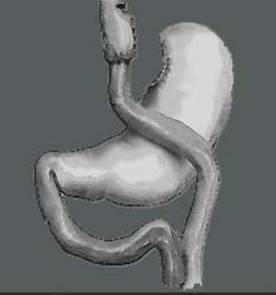
Laparoscopic Gastric Bypass |
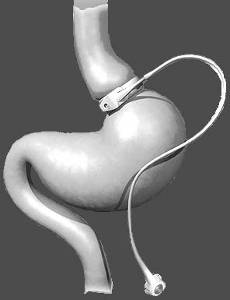
Laparoscopic Adjustable Gastric Band (Lap Band TM) |
|
|
Performed worldwide for over 30 years, it is the most commonly performed operation for weight loss in the United States today. |
Performed for approximately 20 years, though the modern bands are far superior to earlier bands. Approved for use by the FDA for use in the United States in 2001, there have been > 250,000 bands placed worldwide and it is currently the most commonly performed weight loss procedure worldwide outside of the United States. |
Operation involves stapling to divide the stomach and small intestine, and attachment of the small intestine to a very small upper gastric pouch. Food now bypasses the main body of the stomach and goes directly into small intestine. Operation probably works by a combination of restriction of how much patients can eat comfortably and by producing hormonal changes that may blunt hunger, as well as inducing a feeling of satiety (fullness). |
Operation involves placement of an inflatable silicone band around the upper stomach. This is attached by a long, slender tube to a small port which is buried beneath the skin. A thin needle can be introduced into the port and used to inject fluid into the band, or deflate it, making the opening from the pouch larger, or smaller, as needed until a sense of fullness is appreciated. Appears to work by inducing a feeling of satiety (fullness). |
Weight loss generally very good, and is complete within 12-18 months of surgery. |
Weight loss slower but may continue for 3 or even more years postoperatively. |
Quicker resolution or improvement in diabetes. |
Slower improvement in diabetes but longterm outcomes may be similar. |
Riskier surgical procedure; complications may be catastrophic. |
Fewer risks associated with the surgery, itself, though they may occur even years later. |
Iron, calcium and some vitamins not as easily absorbed; can lead to nutritional deficiencies if not supplemented but these are generally avoidable and not common. |
Nutritional deficiencies very uncommon. |
Operation not adjustable. Reversal can be performed, but requires extensive surgery. No foreign body remaining inside the body. |
Operation is adjustable. The band can be deflated allowing unrestricted eating almost immediately; removal (reversal) is generally a much less extensive process. Mechanical device remains around the stomach forever. |
Long term follow up with surgeon is mandatory. |
Long term follow up with surgeon is mandatory. Quality and intensity of follow up may impact quality of weight loss more than with gastric bypass. |
Covered by most insurances, including Medicare (Medicare and Tricare can only be cared for at Centers of Excellence). |
Covered by most insurances, including Medicare (Medicare and Tricare can only be cared for at Centers of Excellence). |
To find your BMI:
Find your height in inches in the first column and locate the BMI across the top which corresponds to your weight in pounds.
You may also use this BMI Calculator.
BMI |
36 | 37 | 38 | 39 | 40 | 41 | 42 | 43 | 44 | 45 | 46 | 47 | 48 | 49 | 50 | 51 | 52 | 53 | 54 |
Ht (in) |
172 |
177 |
181 |
186 |
191 |
196 |
201 |
205 |
210 |
215 |
220 |
224 |
229 |
234 |
239 |
244 |
248 |
253 |
258 |
59 |
178 |
183 |
188 |
193 |
198 |
203 |
208 |
212 |
217 |
222 |
227 |
232 |
237 |
242 |
247 |
252 |
257 |
262 |
267 |
60 |
184 |
189 |
194 |
199 |
204 |
209 |
215 |
220 |
225 |
230 |
235 |
240 |
245 |
250 |
255 |
261 |
266 |
271 |
276 |
61 |
190 |
195 |
201 |
206 |
211 |
217 |
222 |
227 |
232 |
238 |
243 |
248 |
254 |
259 |
264 |
269 |
275 |
280 |
285 |
62 |
196 |
202 |
207 |
213 |
218 |
224 |
229 |
235 |
240 |
246 |
251 |
256 |
262 |
267 |
273 |
278 |
284 |
289 |
295 |
63 |
203 |
208 |
214 |
220 |
225 |
231 |
237 |
242 |
248 |
254 |
259 |
265 |
270 |
278 |
282 |
287 |
293 |
299 |
304 |
64 |
209 |
215 |
221 |
227 |
232 |
238 |
244 |
250 |
256 |
262 |
267 |
273 |
279 |
285 |
291 |
296 |
302 |
308 |
314 |
65 |
216 |
222 |
228 |
234 |
240 |
246 |
252 |
258 |
264 |
270 |
276 |
282 |
288 |
294 |
300 |
306 |
312 |
318 |
324 |
66 |
223 |
229 |
235 |
241 |
247 |
253 |
260 |
266 |
272 |
278 |
284 |
291 |
297 |
303 |
309 |
315 |
322 |
328 |
334 |
67 |
230 |
236 |
242 |
249 |
255 |
261 |
268 |
274 |
280 |
287 |
293 |
299 |
306 |
312 |
319 |
325 |
331 |
338 |
344 |
68 |
236 |
243 |
249 |
256 |
262 |
269 |
276 |
282 |
289 |
295 |
302 |
308 |
315 |
322 |
328 |
335 |
341 |
348 |
354 |
69 |
243 |
250 |
257 |
263 |
270 |
277 |
284 |
291 |
297 |
304 |
311 |
318 |
324 |
331 |
338 |
345 |
351 |
358 |
365 |
70 |
250 |
257 |
264 |
271 |
278 |
285 |
292 |
299 |
306 |
313 |
320 |
327 |
334 |
341 |
348 |
355 |
362 |
369 |
376 |
71 |
257 |
265 |
272 |
279 |
286 |
293 |
301 |
308 |
315 |
322 |
329 |
338 |
343 |
351 |
358 |
365 |
372 |
379 |
386 |
72 |
265 |
272 |
279 |
287 |
294 |
302 |
309 |
316 |
324 |
331 |
338 |
346 |
353 |
361 |
368 |
375 |
383 |
390 |
397 |
73 |
272 |
280 |
288 |
295 |
302 |
310 |
318 |
325 |
333 |
340 |
348 |
355 |
363 |
371 |
378 |
386 |
393 |
401 |
408 |
74 |
280 |
287 |
295 |
303 |
311 |
319 |
326 |
334 |
342 |
350 |
358 |
365 |
373 |
381 |
389 |
396 |
404 |
412 |
420 |
75 |
287 |
295 |
303 |
311 |
319 |
327 |
335 |
343 |
351 |
359 |
367 |
375 |
383 |
391 |
399 |
407 |
415 |
423 |
431 |
76 |
295 |
304 |
312 |
320 |
328 |
336 |
344 |
353 |
361 |
369 |
377 |
385 |
394 |
402 |
410 |
418 |
426 |
435 |
443 |
Weight Loss Surgery Lectures and Support Groups :2012
Mark A. Vierra MD and Community Hospital of Monterey Peninsula
All lectures and meetings are held At the Community Hospital of the Monterey Peninsula
(CHOMP) All are free and opened to the public. Family members are welcome.
WEIGHT LOSS SURGERY INFORMATIONAL SEMINAR (FOR EVERYONE)
Time: 7-8:30 p.m. CHOMP CONFERENCE ROOM A/B/C. This lecture is given by Dr. Mark Vierra. All patients wishing to be considered for weight loss surgery should attend this meeting prior to making an appointment to be considered for surgery. Topics include the biological basis for obesity, a review of strategies for weight loss, surgical options, outcomes and complications. Family members are encouraged to attend. This class is also a good refresher for post op patients!
| January 5 | February 2 | March 1 | April 5 | May 3 | June 7 |
| July 5 | August 2 | September 6 | October 4 | November 1 | December 6 |
WEIGHT LOSS SURGERY SUPPORT GROUP (FOR EVERYONE)
Time: 6:30-8:30 p.m. every second Thursday of the month at CHOMP CONFERENCE ROOM A/B/C. Led by a Registered Dietician from CHOMP, this group focuses on patients considering surgery and who are recently had surgery. It is strongly recommended but not required for all patients who are considering weight loss surgery. Pre operative, post operative patients and family members for all procedures welcomed. This CAN be part of your "Supervised diet".
| January 12 | February 9 | March 8 | April 12 | May 10 | June 14 |
| July 12 | August 9 | September 13 | October 11 | November 8 | December 13 |
ADVANCED WEIGHT LOSS SURGERY SUPPORT GROUP (FOR GBP AND SLEEVE)
Time 6:30-8:00 p.m. every fourth Wednesday of the month at CHOMP Cancer Center Classroom. Led by a Registered Dietician from CHOMP, this group focuses on patients who have already had surgery and are at least one year out from surgery for gastric bypass and gastric sleeve.
| January 25 | February 22 | March 28 | April 25 | May 23 | June 27 |
| July 25 | August 22 | September 26 | October 24 | November 28 | December: no meeting |
WEIGHT LOSS SURGERY BANDING SUPPORT GROUP MEETING(GASTRIC BANDS)
Time 7:00-8:30 p.m. every fourth Thursday at CHOMP Conference room CCC. Led by D Hamilton RPA-C, this support group meeting is for Post operative patients with adjustable gastric bands (Lapband and Realize.) Meetings include peer to peer support with professional guidance and education for the Banded lifestyle and meeting weight loss goals after surgery.
| January 26 | February 16* | March 22 | April 26 | May 24 | June 28 |
| July 26 | August 23 | September 27 | October 25 | November no meeting | December 27 |
AFTER WEIGHT LOSS SURGERY: “BACK ON TRACK” Second Saturday of each month Time 10:00-11:30 A.M., post operative lecture series given by D Hamilton RPA-C. Topics vary and are designed to engage patients to use there procedure better to obtain and maintain their weight loss goals after surgery. Seating is limited please call to reserve space 831 649-0808 or email us at DrVierrasoffice@monterysurgery.com.
Meetings are also posted on www.montereysurgery.com, www.CHOMP.org and www.LAPBAND.com.
Community Hospital location: 23625 Holman Highway Monterey, CA 93940-5902 From Hyw 1 SOUTH from Monterey, take exit 399A, exit Right, hospital is on Right in .2 miles. 24 hour phone (831) 624-5311
“Weight Loss Surgery Back on Track 2012”
Held at CHOMP in the Cancer Conference Center on Saturdays
RSVP for these classes to 831 649-0808
Who should attend? Classes for the post op patient who wants more information, is
interested in re-engaging in the bariatric lifestyle or just wants a re-fresher....FREE
classes are held the FOURTH SATURDAY of the month: Jan 28, Feb 25, March 24,
April 28, May 19, June 23, July 28, Aug 25, Sept 22, Oct 27, No class in November, Dec
22.
Jan 28 2012 -10:00 am: "Mindfulness- staring steps for all post op weight loss surgery patients"
All procedures. Discuss the art of using your bariatric procedure to meet goals including
optimizing anatomical changes, bariatric food combinations that are procedure specific,
awareness of your anatomical changes, prevent sabotage behavior.
Feb 25 2012 10:00am: "How to use your WLS procedure: Gastric Banding Basics"
Meeting to discuss post op use of lapband, anatomical changes in relation to the mechanics of eating, power point presentation with post op x-ray images.
11:30 am" How to use your WLS procedure: Bypass and Sleeve Basics"
Meeting to discuss post op use of your bariatric procedure including basic guidelines, anatomical changes in relation to the mechanics of eating and power point presentation with post op x-ray images.
March 24, 2012 - 10:00 am: "Using your pouch better to prevent weight regain"
All procedures; Discuss strategies to prevent sabotage of the bariatric procedure, how to optimize satiety verses over filling the pouch.
April 28, 2012 - 10:00 am: "Emotional Eating after WLS"
All procedures. Developing strategy for minimizing emotional eating after WLS.
May 19* 10:00 am: "How to use your WLS procedure: Gastric Banding Basics"
11:30 am" How to use your WLS procedure: Bypass and Sleeve Basics"
June 23 - 10:00 am: "Mindfulness- staring steps for all post op weight loss surgery patients"
July 28 - 10:00 am: "Using your pouch better to prevent weight regain"
Aug25 - 10:00am: "How to use your WLS procedure: Gastric Banding Basics"
11:30 am" How to use your WLS procedure: Bypass and Sleeve Basics"
Sept 22 - "Emotional eating after WLS"
Oct 27 - 10:00 am: "Mindfulness- starting steps for all post op weight loss surgery patients"
Nov 12 - No meeting
Dec 22 - Mindfulness: Having New Years solutions that work for WLS
Presenter is D Hamilton PA-C, Bariatric Coordinator for Dr Mark Vierra
RSVP for these classes to 831 649-0808
Meetings are also posted on www.montereysurgery.com, www.CHOMP.org and www.LAPBAND.com.